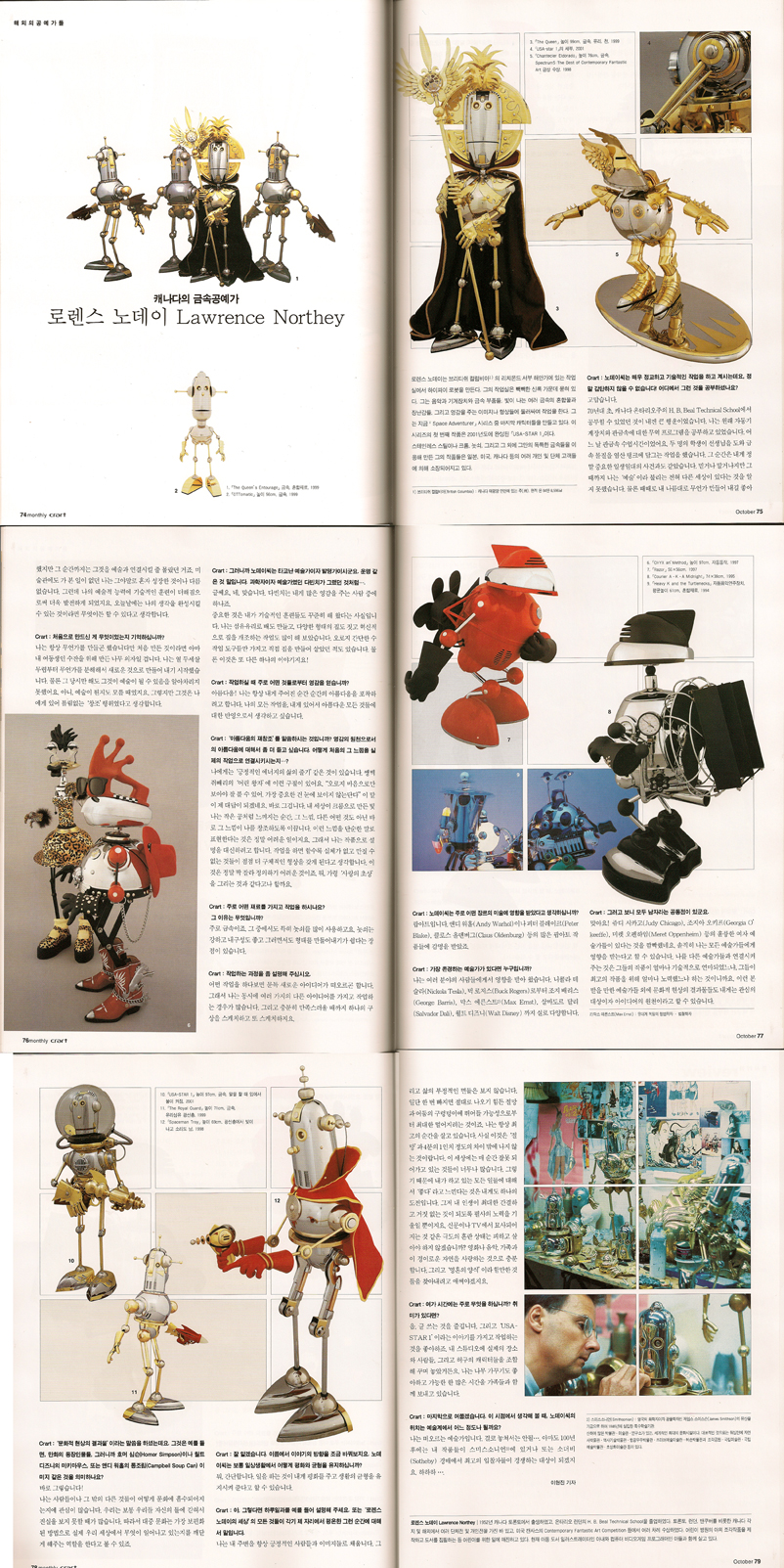
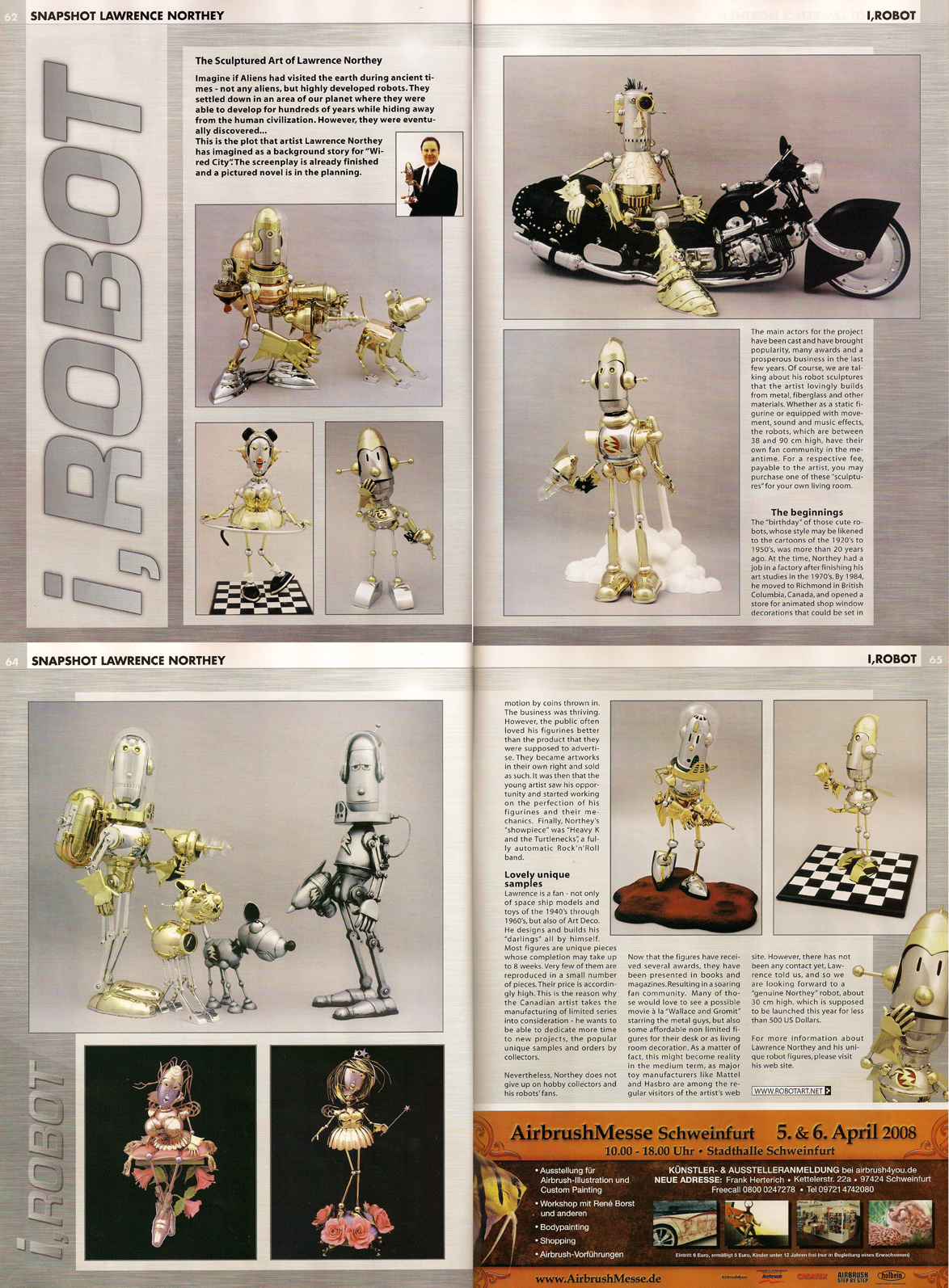
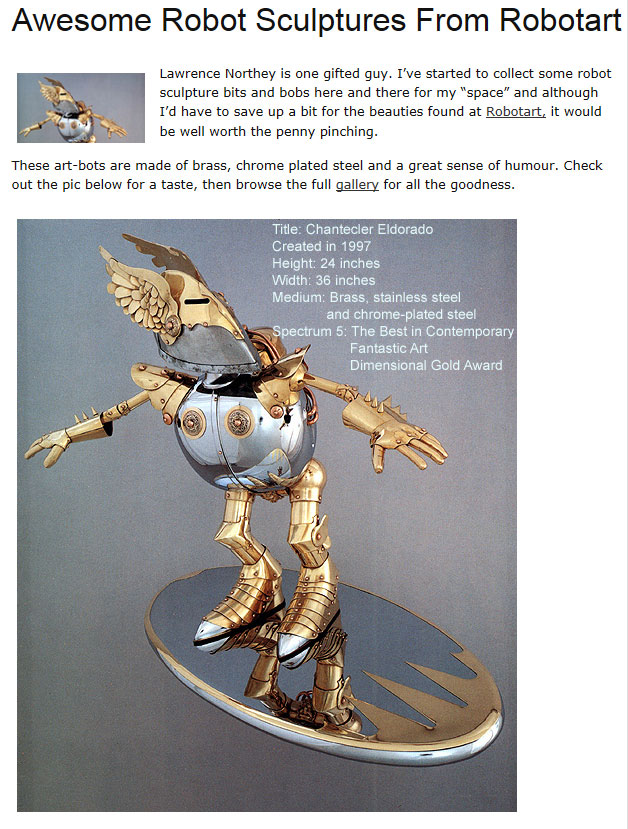
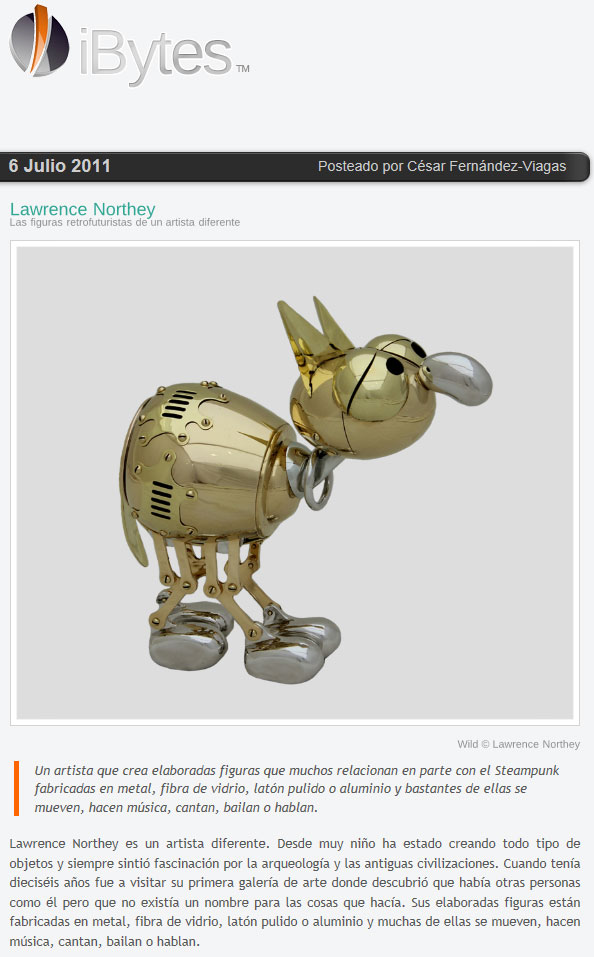
1998 : Spectrum 5 : The Best in Contemporary Fantastic Art
1999 : Spectrum 6 : The Best in Contemporary Fantastic Art
2002 : Spectrum 9 : The Best in Contemporary Fantastic Art
Silver Award : Dimensional - "L-Roy"
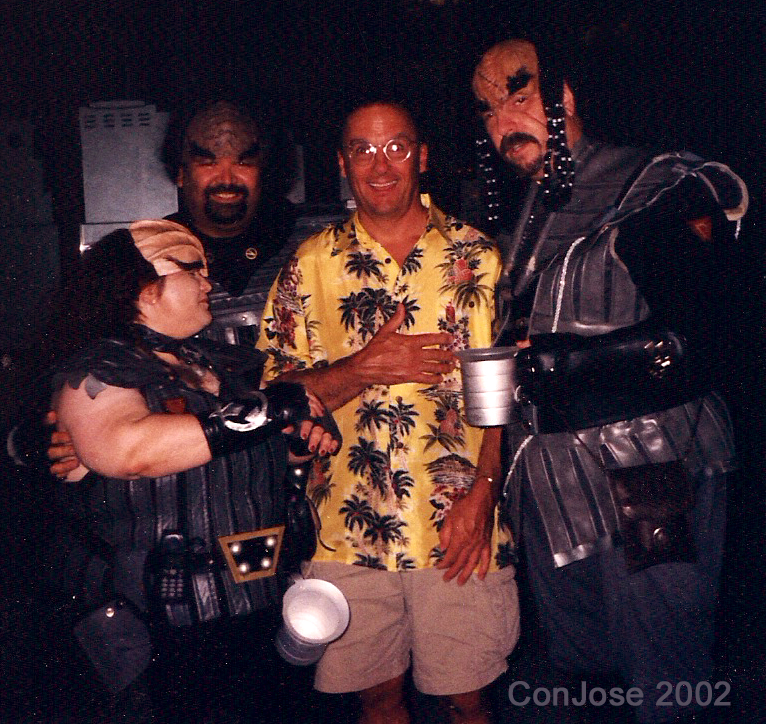
2002 : ConJose : 60th Annual Science Fiction Convention & Art Show
San Jose, California
Judges Choice Award
Directors' Choice Award
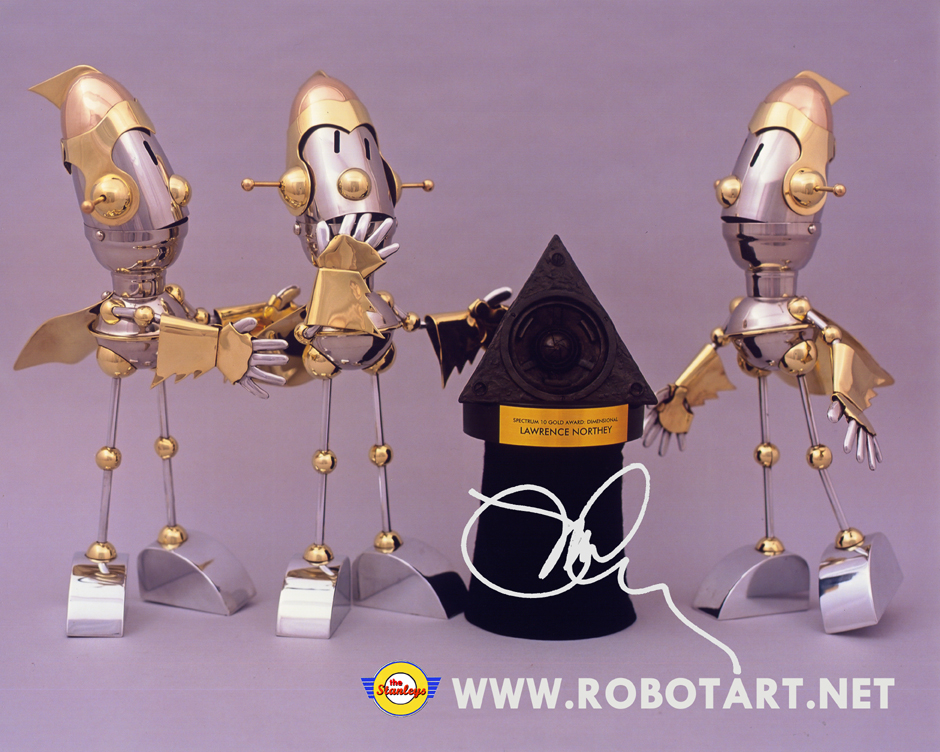
2003 : Spectrum 10 : The Best in Contemporary Fantastic Art
2005 : Spectrum 12 : The Best in Contemporary Fantastic Art
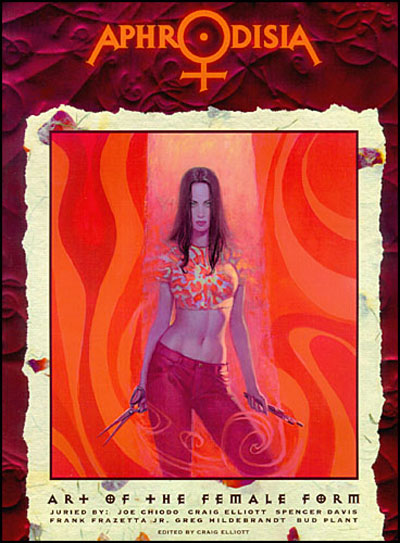
2005: Sculpture Silver Award : Aphrodisia: Art of the Female Form - "Quan Yin"
EXHIBITIONS:
2009: BOXeight Studios, Los Angeles, California
California Modern Art Gallery, San Francisco. California
2008: Elissa Cristall Gallery, Vancouver, British Columbia
2006: Richmond Art Gallery, Richmond, British Columbia
2005: Spectrum: The Exhibition at the Museum of American Illustration, New York, NY
2005: Cheongju International Craft Biennale, Cheongju, Republic of Korea
2003: First Biennial Dimensional Salon, Museum of American illustration, New York, NY
2002: ConJose: 60th Annual Science Fiction Convention & Art Show
San Jose, California
1999: John Natsoulas Gallery, Davis, California
1998: Twist Gallery, Portland, Oregon
1997: Richmond Art Gallery, Richmond, British Columbia
There is a city of gold. I'm headed for the city of gold before it's too late, before it gets too cold before I'm too tired, before I'm too old. I'm headed for the city of gold.

Q: Where do you get your ideas from, what inspires you?
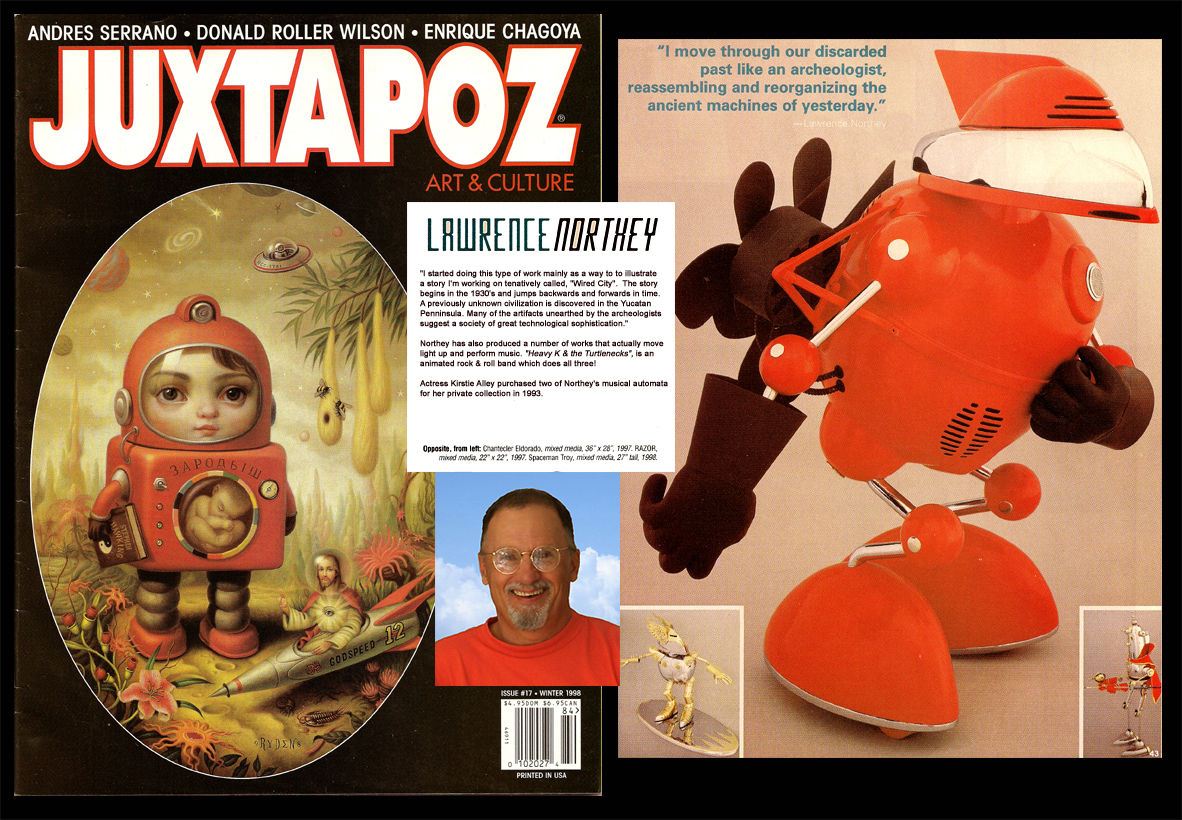
A: I'm not exactly sure where it all got started but, at some point I started collecting all these odd, little bits of information about unexplained phenomena. Sometimes called "ooparts" these are those peculiar objects that by every scientific measure are very old but, in form and construction appear to be quite modern. They are impossible fossils, out-of-time technology, anachronistic artifacts that, if our history of the world is correct, shouldn't exist. What makes them so interesting to me is that unlike the strange stories of Bigfoot or, the Loch Ness Monster these unexplained artifacts can be seen, touched and examined. Without really trying too I found myself writing a story around these "impossible" things and a kind of fantastic world started to evolve. My gallery page reveals many of the characters I've created to occupy this other possible history. Simultaneously I've been working on an illustrated story that I'll be unveiling in 2010 (God willing and the creeks don't rise..)
Q: Do you draw each sculpture before starting?
A: Once an idea hits me I'm eager to start but, if I'm not able to get to it right away I might do a few rough sketches as a kind of visual-shorthand. I do draw many of the complicated bits that go into the actual armature of one of these works. Using these designs I then construct cardboard patterns to make whatever adjustments might be necessary. I've discovered that it's best to work directly because even though in a drawing anything is possible, there are many practical considerations necessary to create a free-standing sculpture (or, as in the example shown below, free-hanging)
Q: What is your process? Can you walk us through a typical start to finish?
Quite a bit of what I do could be called imagineering. For instance the figure has to stand and balance, there are several things one must do to accomodate this goal alone. For me, the best way is working directly with the sculpture and solving whatever problems I encounter as I go. This primary stage is generally pretty rough but it serves to flesh out the idea and whatever technical and aesthetic concerns I might encounter. When I'm satisfied with the overall design I photograph everything and then take it all apart for sanding and polishing. This is where the 99% perspiration of the Edison equation really kicks in. I'll spends days, sometimes weeks in front of the polishing machine dressed in layers of protective gear polishing each individual piece until I achieve the finish I want.
(to be continued...)